
A good webinar has a strange economics problem: the session that fills your course took twenty hours to perfect, and then you delivered it once, at 7pm, to whoever could make it. The webinar engine exists to break that trade — you record the session once, and it runs on a schedule forever.
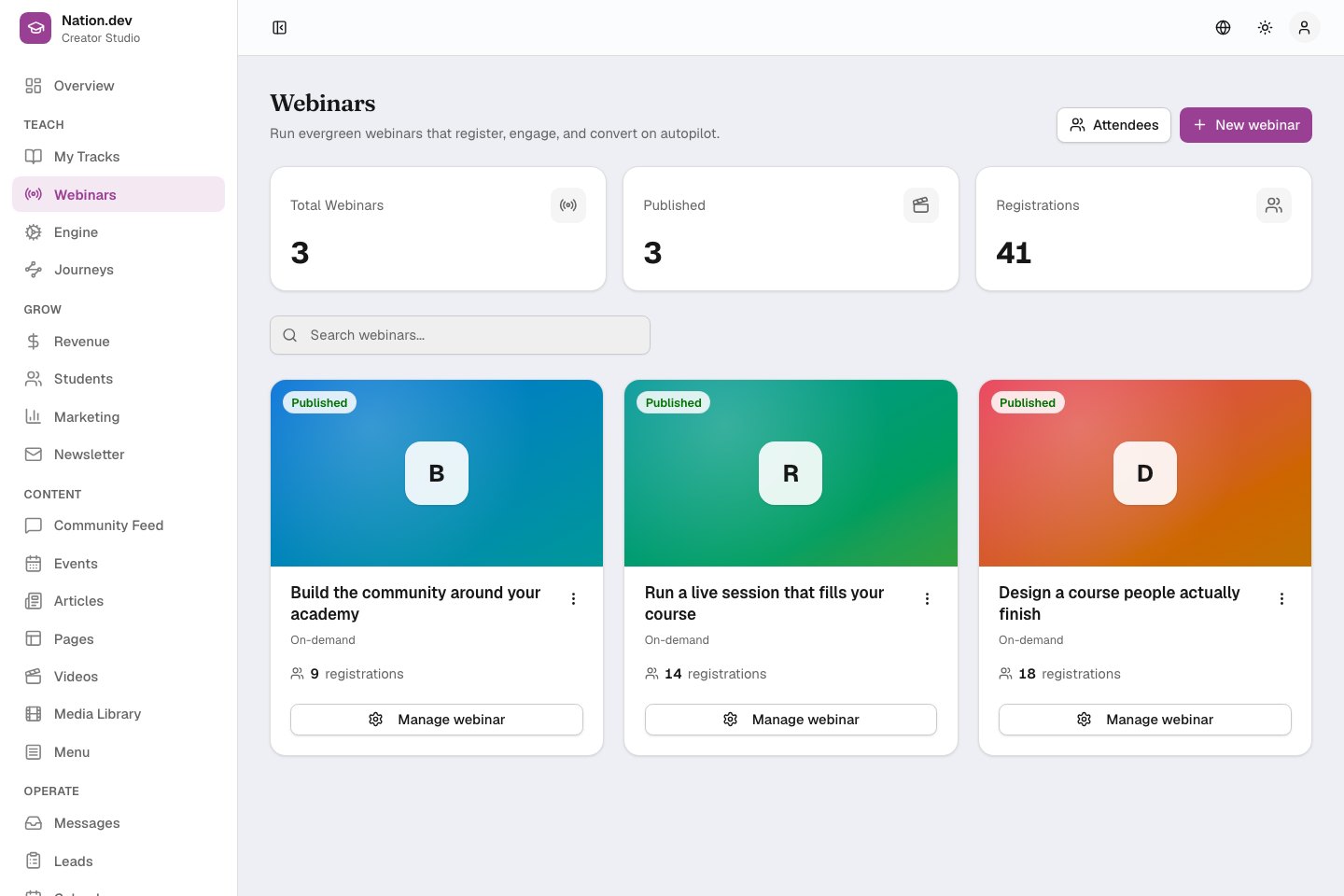
Two ways to schedule, one recording
A webinar is your recording plus a schedule. Repeating sessions run just-in-time — "every day at a quarter past" — so there is always one starting soon. On-demand sessions start the moment someone registers: each registrant gets their own timer and their own session. Either way the playback is deterministic and session-like; nobody scrubs ahead, everyone experiences the same arc you designed. (To be precise about the one thing it is not: this is not a real-time broadcast — it is your best recording, delivered like a session.)
The lifecycle runs itself
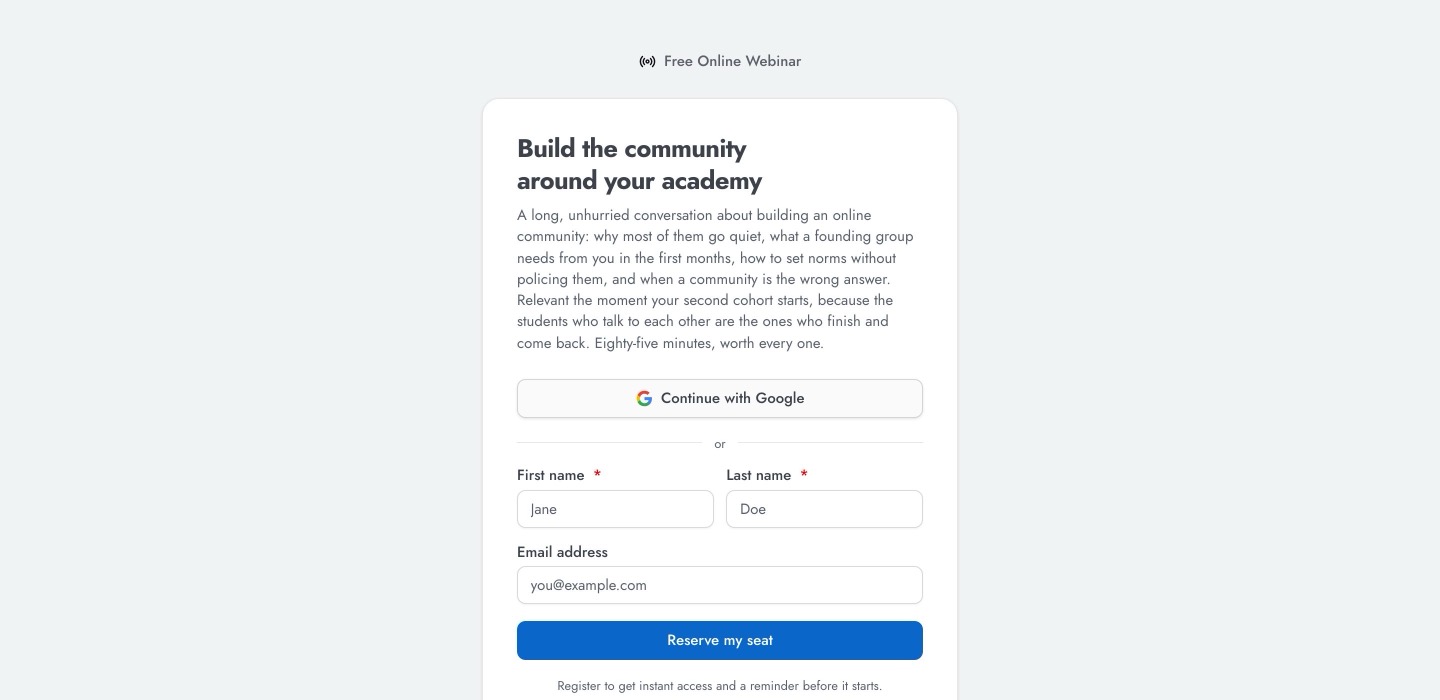
Registration collects the attendee (guest email or member account), and the default playbook takes over: a confirmation with the session time, reminders before it starts, a replay-ready email after, and a follow-up to registrants who never showed. Every one of those emails is editable, and every one can be replaced by your own automation on the same trigger.
You see who showed up — and how long they stayed
The attendees screen tracks registrations, show-up rate and average watch time. Watch progress is itself an automation trigger: "watched 50%" can tag someone engaged, unlock an offer sequence, or start a conversation. Clicks on your in-session offer are tracked too — so the webinar is not just delivery, it is the top of a funnel you can actually read.