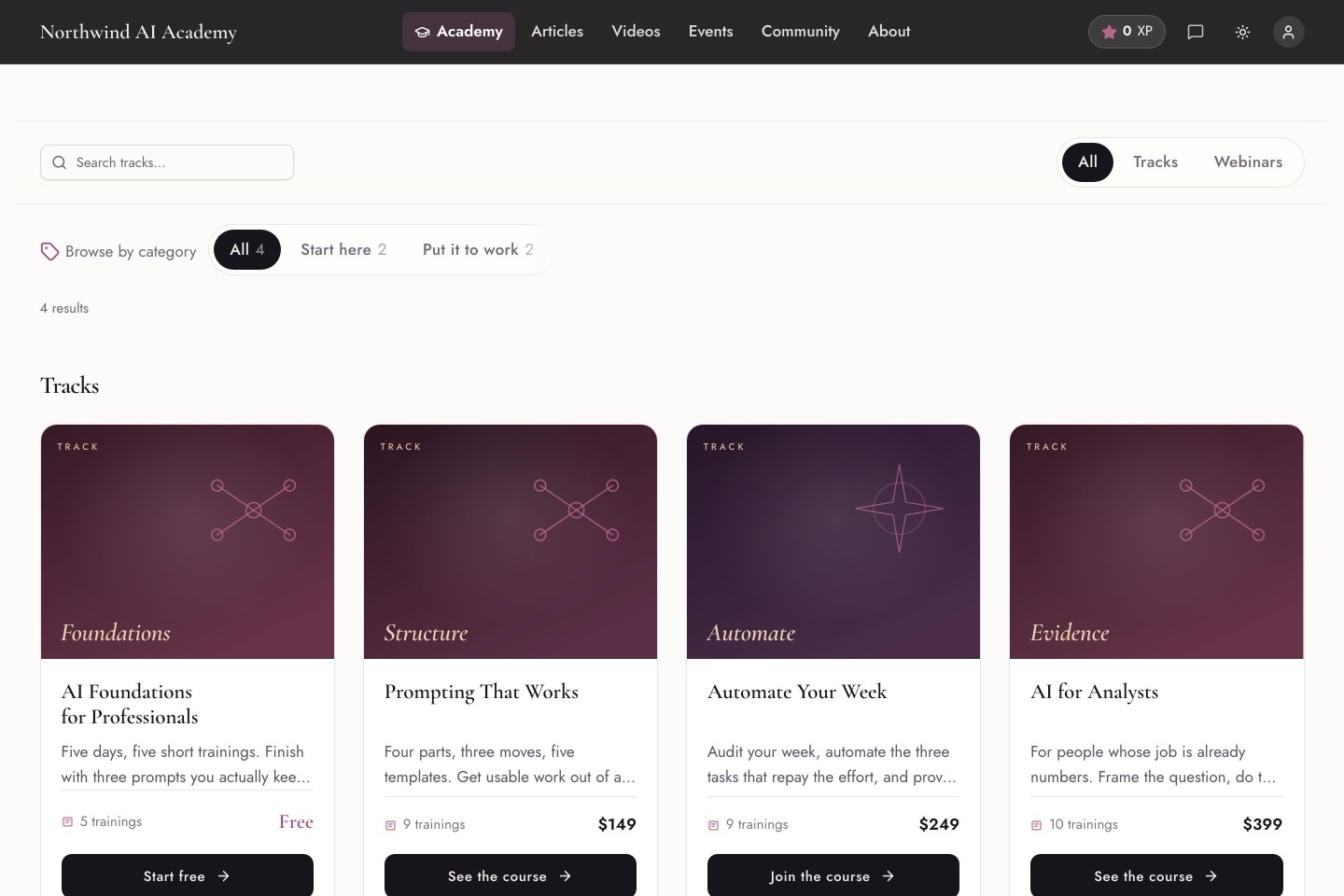
Pricing a program is a positioning decision; collecting the money should be plumbing. The commerce layer in Academy OS is deliberately boring in the best way: Stripe underneath, your pricing model on top, and access control that follows the money without you adjudicating it.
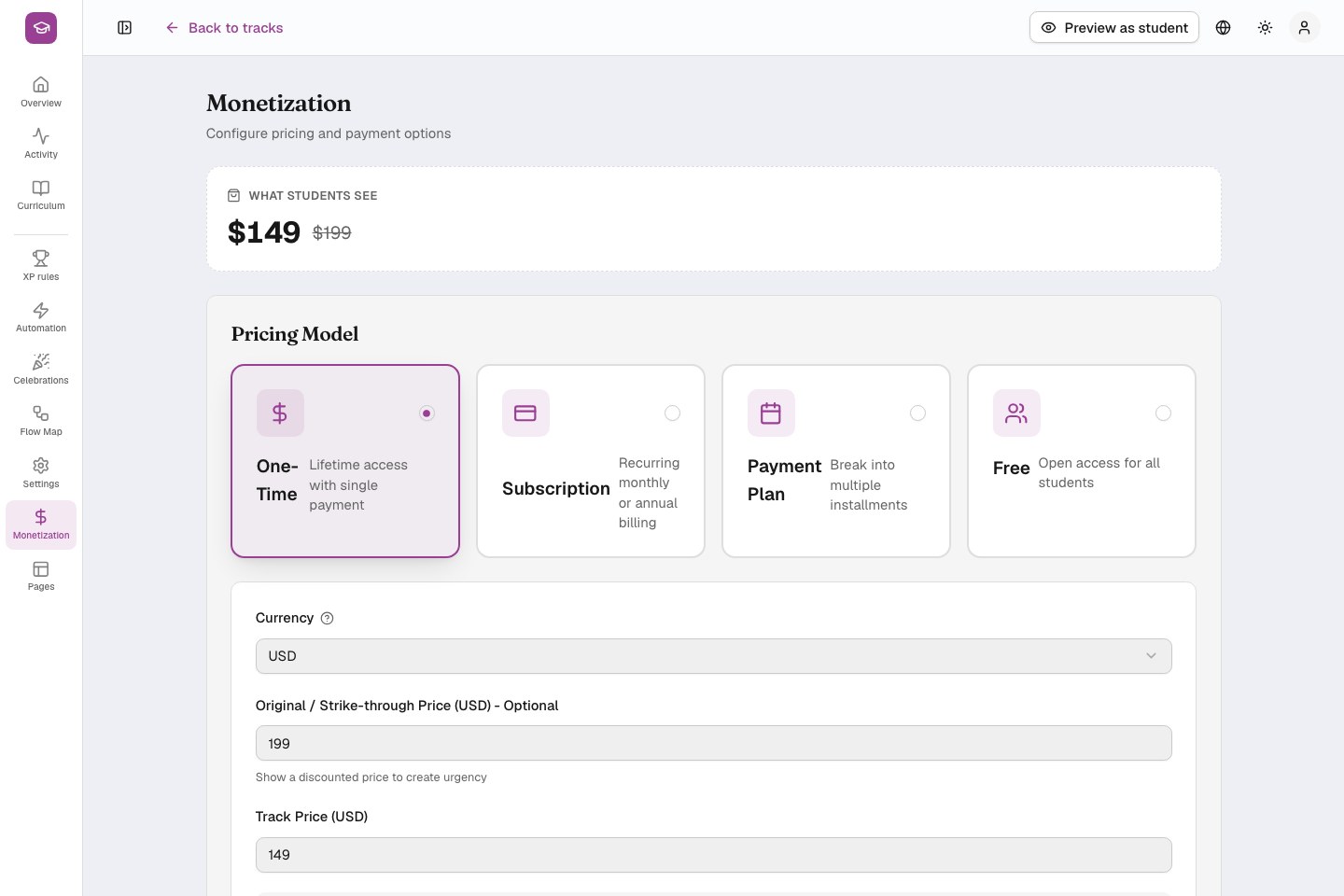
Three ways to charge, per course
Each course picks its own model: a one-time price, a subscription, or a payment plan (n installments, then done). Each course also picks its own currency — price the flagship in euros and the workshop in kronor if that's where the audiences are. Coupons are course-scoped, and Stripe Tax handles the part nobody wants to think about.
Checkout that doesn't lose the sale
Buyers don't need an account to pay — guest checkout takes the payment first and creates the sign-in afterwards, which is the right order when someone has their card out. Payments land in your Stripe account. And when a renewal fails, the platform runs the follow-up: the student sees a clear past-due state with a fix-it path, instead of silently losing access or silently keeping it.
Access follows the money
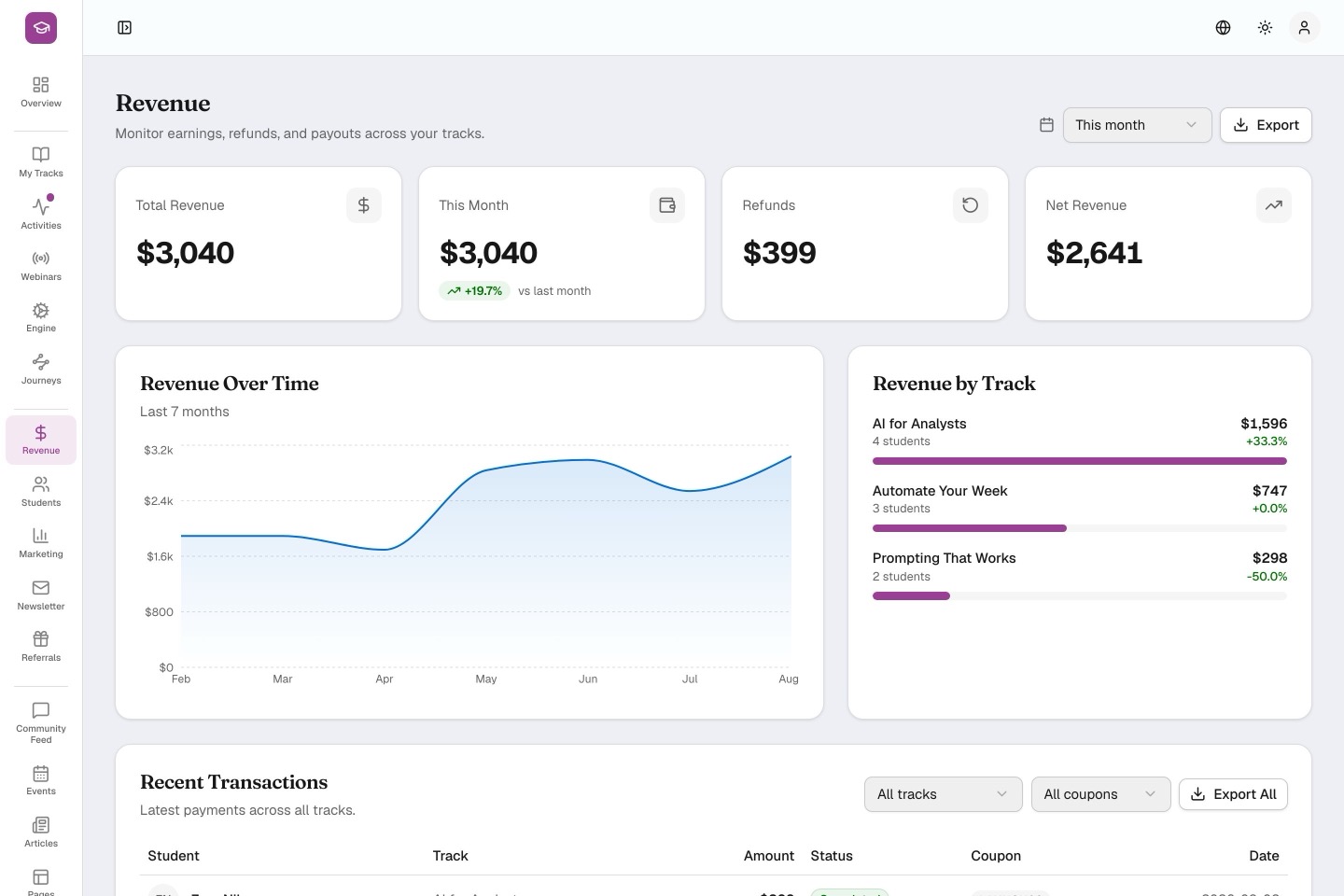
Enrollment is created by the purchase and scoped by it: subscription access is bound to the paid period, refunds revoke what they should and no more, and a course can additionally expire access after a set time or require a prerequisite course first. You never maintain a spreadsheet that says who is allowed in — the orders are the spreadsheet.