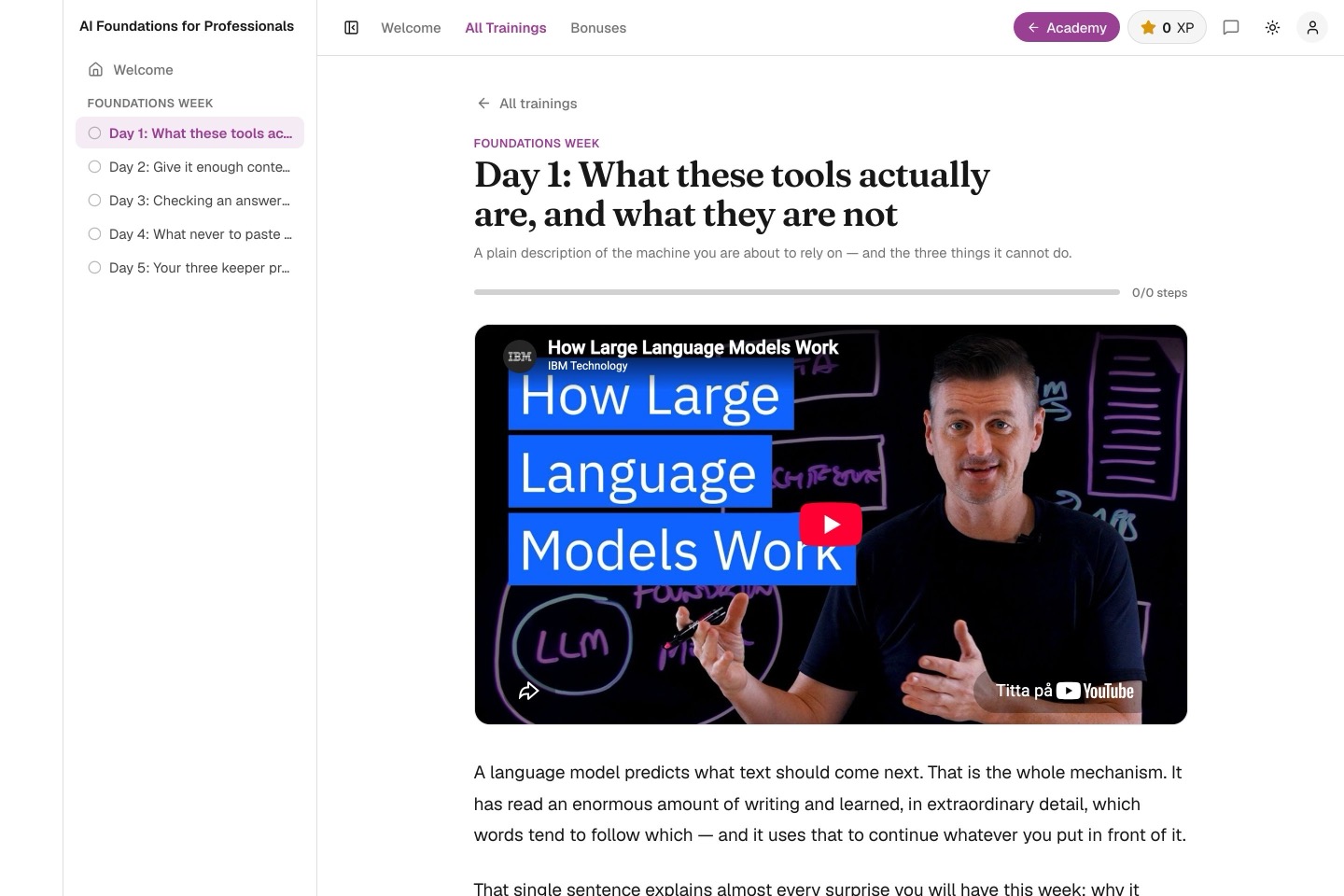
Most course platforms are video libraries with a checkout. The whole design bet behind Academy OS is different: a course is an experience with a finish line, and everything in the builder exists to get more of your students across it. This is a tour of what that means in practice.
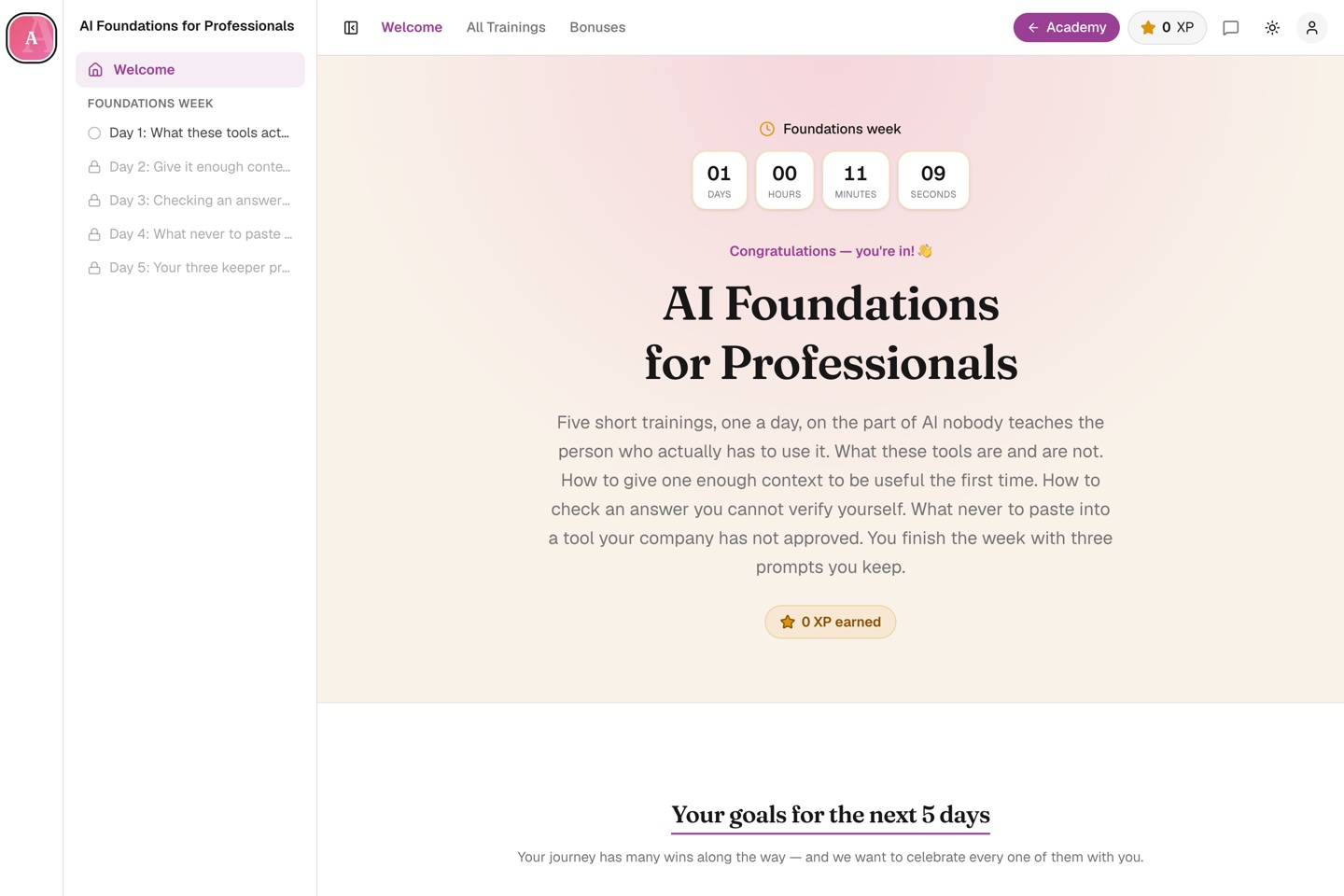
Trainings that open on the student's clock
Each training carries its own release timing. The common pattern: day two opens one day after that student joined — someone who enrolls on a Thursday gets day three on Sunday, in their own timezone. Running a cohort instead? Anchor the release to a shared course start date and everyone opens the same training on the same morning, however late they enrolled.
Trainings sit inside modules, can nest one level deep (a parent training with sub-trainings under it), and can be locked behind the previous one — so a student is never staring at forty videos wondering where to start.
Work, not watch-time
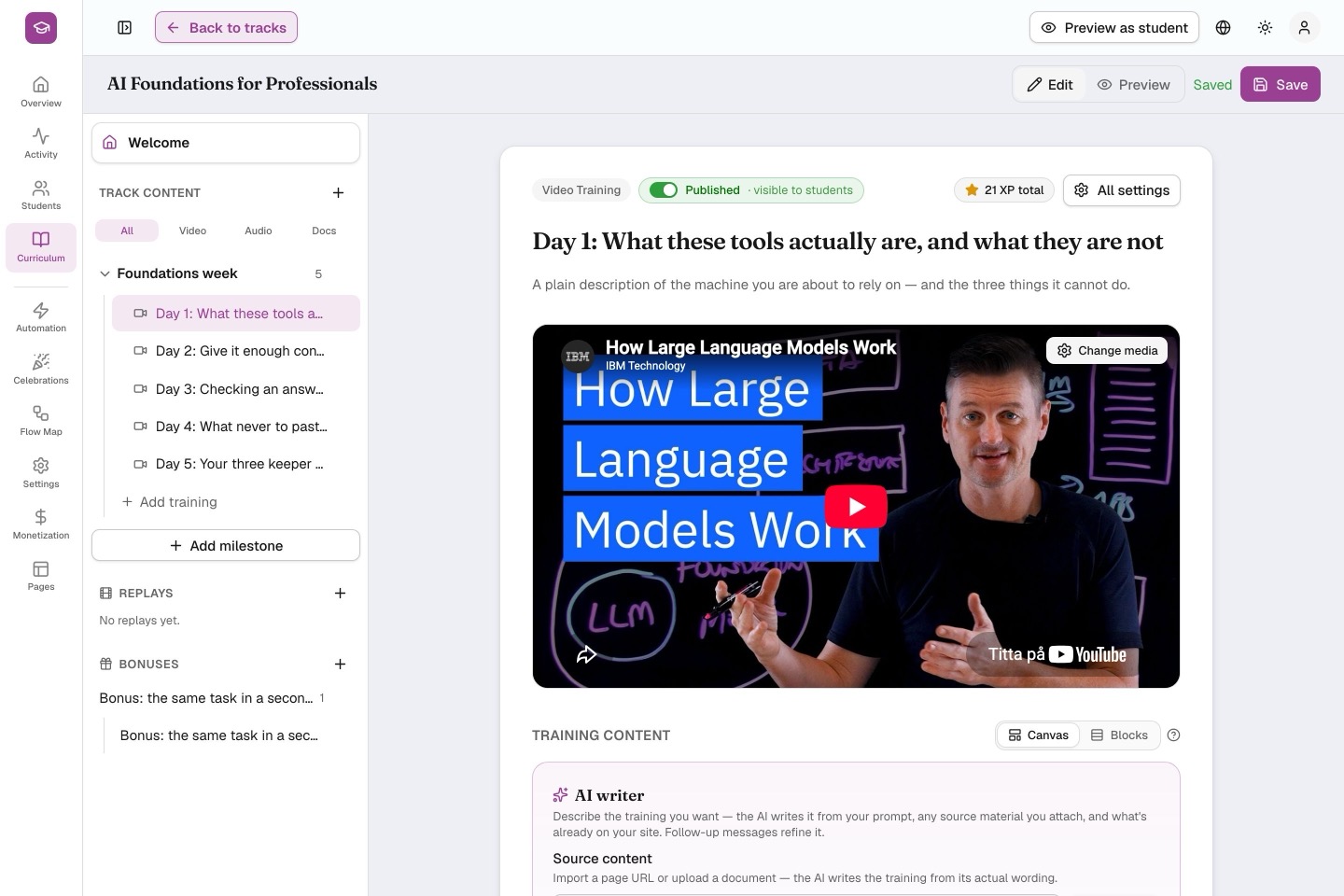
Every training can carry actions: a quiz with per-answer feedback, a written reflection with a minimum length, a checkbox for work done outside the platform, a file upload, links, even submitted code with syntax highlighting. Actions carry XP — points land on work that was actually done, never on a video that merely played.
Written and uploaded work goes somewhere: your review queue. You read it, comment, approve or send it back. That loop — a person reading the work — is the single biggest difference between a course and a PDF, and the platform treats it as a first-class surface rather than a bolted-on form.
A stated mission, three finish lines
Each course states its mission as one sentence — who it helps, to what result, in what timeframe — and sets three goals: Minimum, Target, Stretch. Goals render on the welcome page with the rewards you attach (XP, a badge, unlocked content), and students claim them when they get there. A student who does a third of the work still crosses a real finish line, and an optional countdown makes today matter more than someday.